Explore our engineering-grade heavy duty storage solutions manufactured to international safety standards.
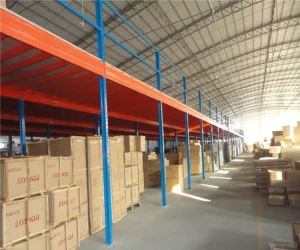
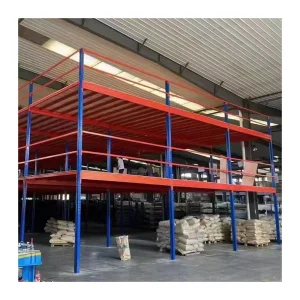
Modern commercial warehousing has advanced beyond basic pallet placement. In a competitive market defined by Just-In-Time (JIT) delivery, e-commerce fulfillment speed, and soaring urban industrial real estate costs, optimizing physical footprint and accelerating inventory velocity is critical. Businesses are shifting away from warehouse expansion toward vertical cubic space maximization.
Inventory turnover rate serves as a key indicator of supply chain health. Low turnover indicates capital tied up in slow-moving stock, while high turnover relies on immediate, frictionless inventory access. Structurally optimized warehousing plays a critical role here. By integrating modern pallet racking and mezzanine platforms, distribution centers can transition from simple storage units into high-throughput hubs.
Global supply chain demands also require compliance with strict regional regulations. Whether implementing dynamic push-back systems in Europe or high-capacity selective racks in North America, storage infrastructure must balance maximum density with structural safety and quick inventory access.
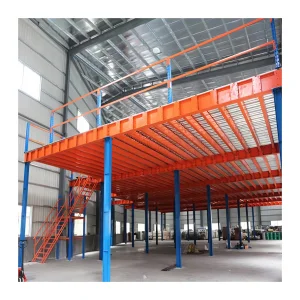
Convert underutilized overhead space into high-capacity storage zones, increasing warehouse capacity by up to 100% without expanding the physical footprint.
Manufactured using Q235B/Q355B structural steel, meeting key international industrial testing standards like FEM and RMI.
China is a global leader in industrial racking systems due to its robust steel supply chain, advanced manufacturing automation, and integrated industrial clusters. Guangdong Guanlongxing Storage Equipment Co., Ltd. leverages these regional advantages to deliver structural integrity, precise custom engineering, and cost-effective solutions to global markets.
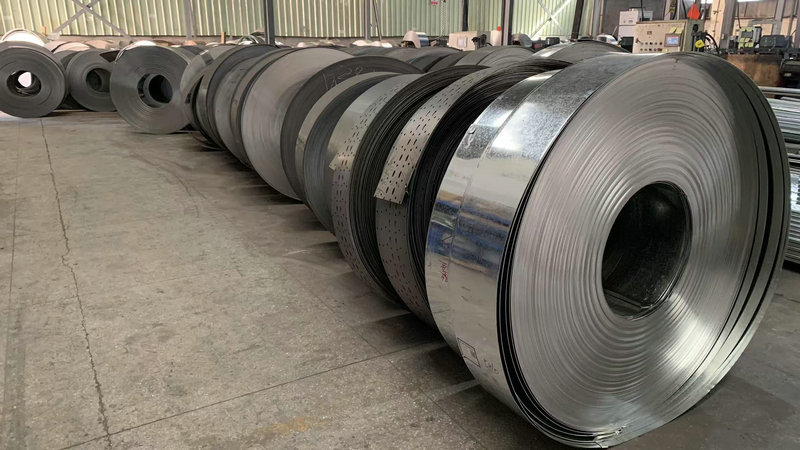
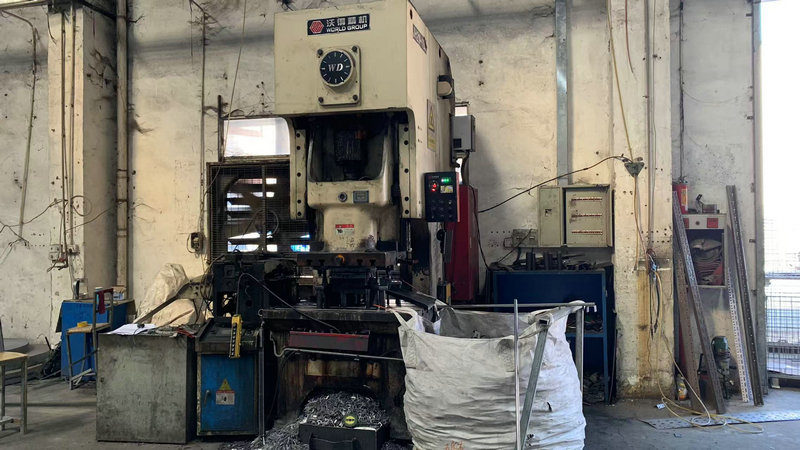
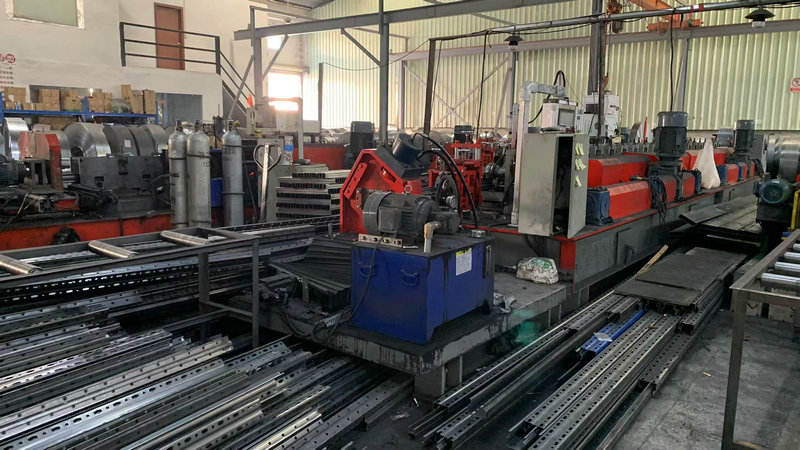
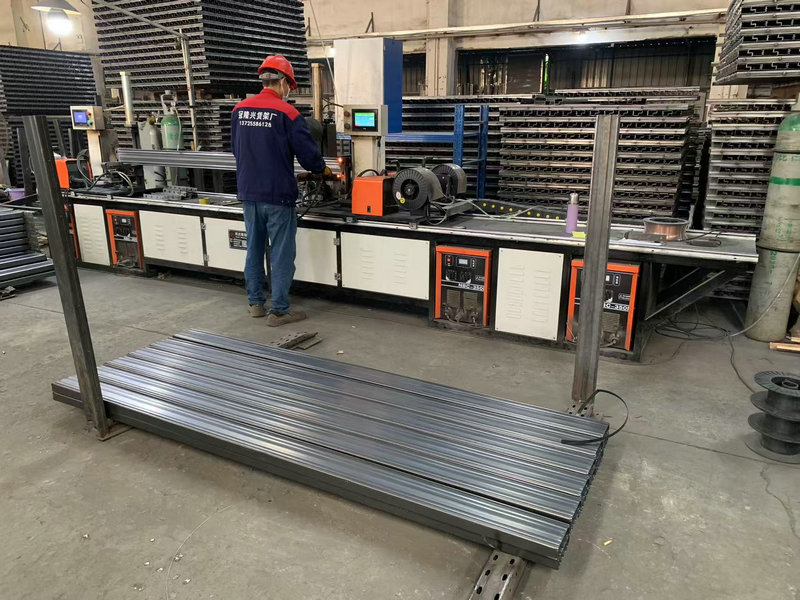
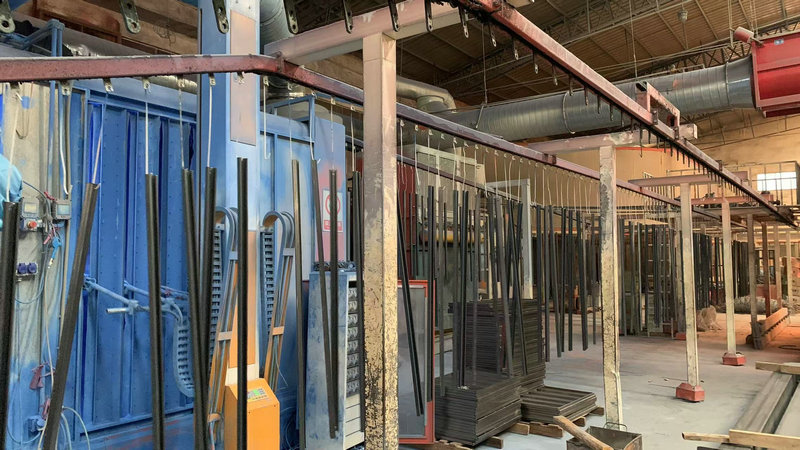
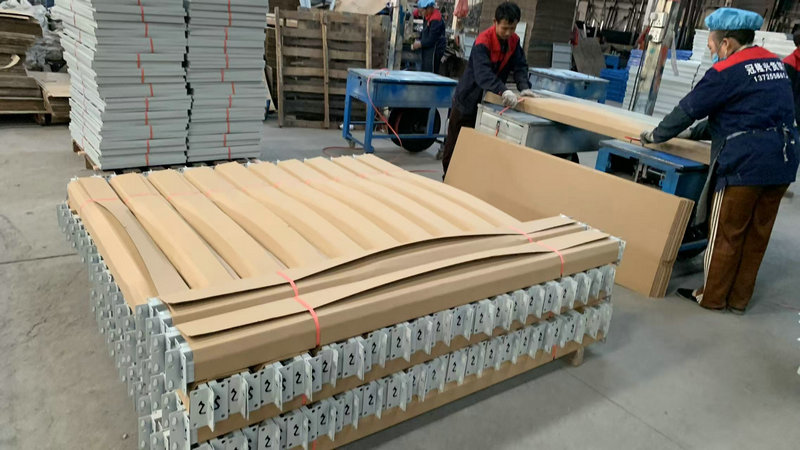
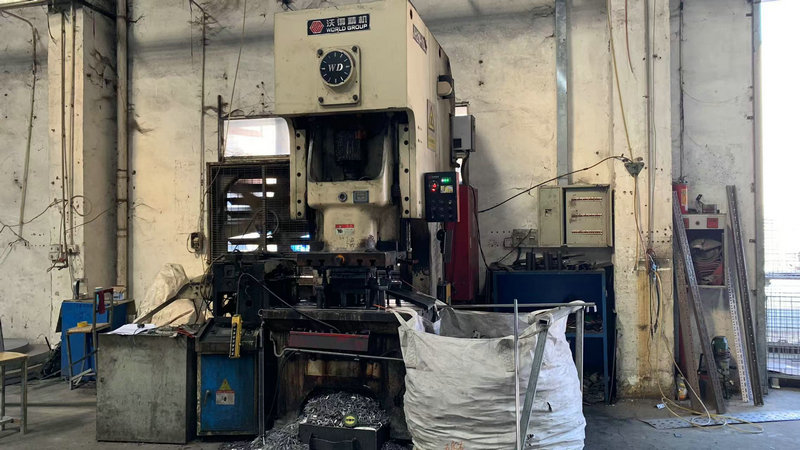
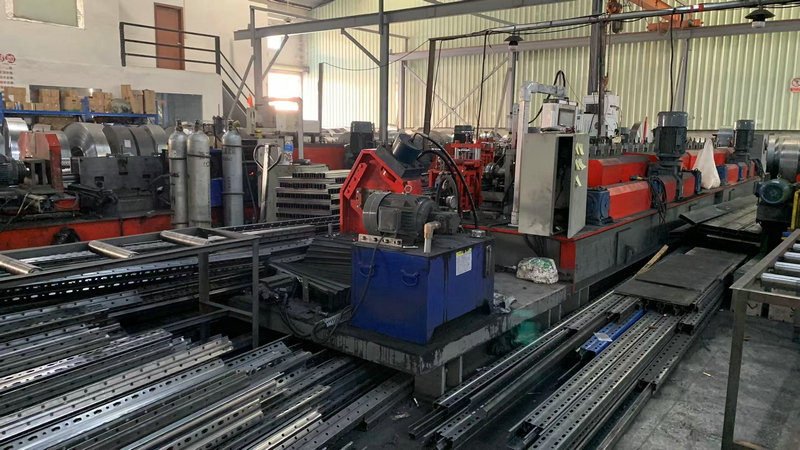
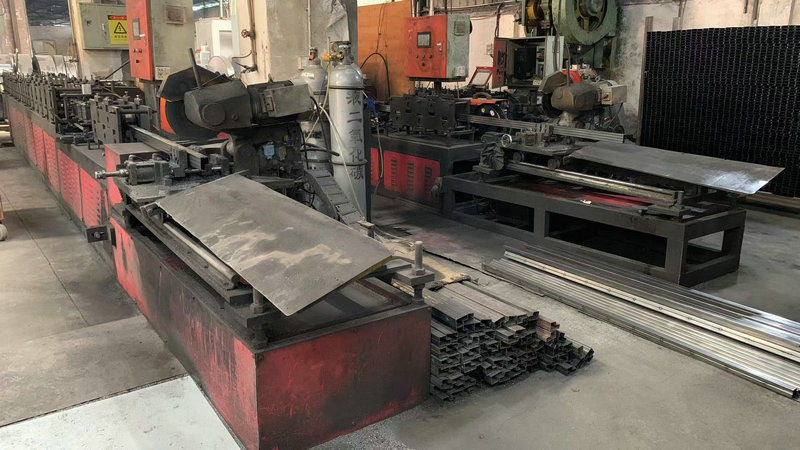
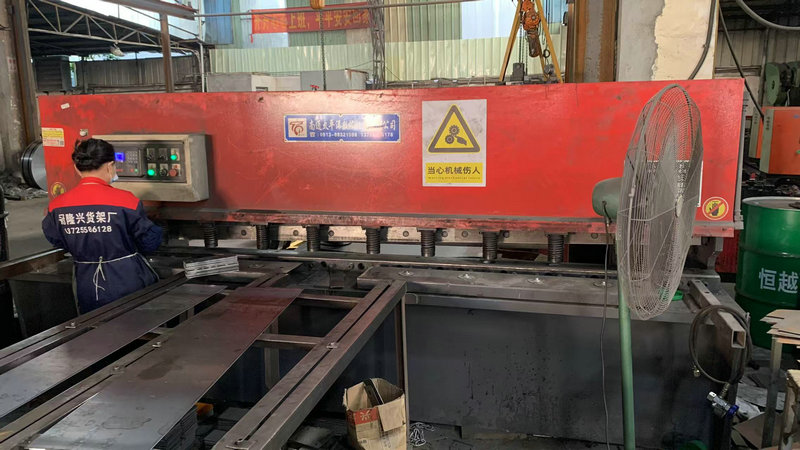
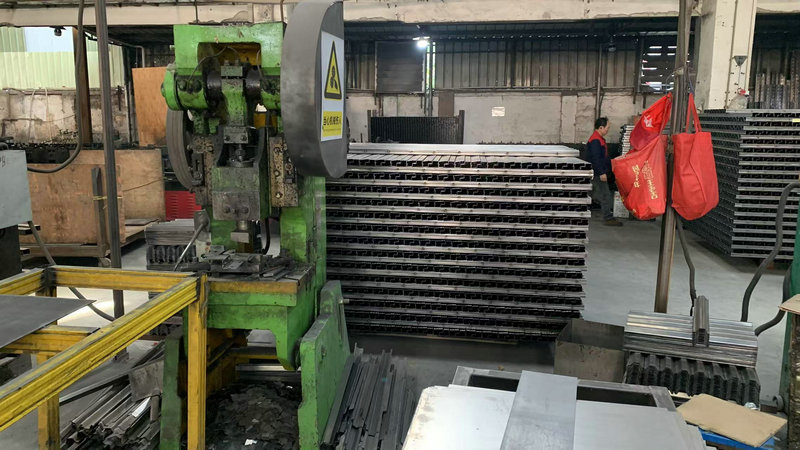
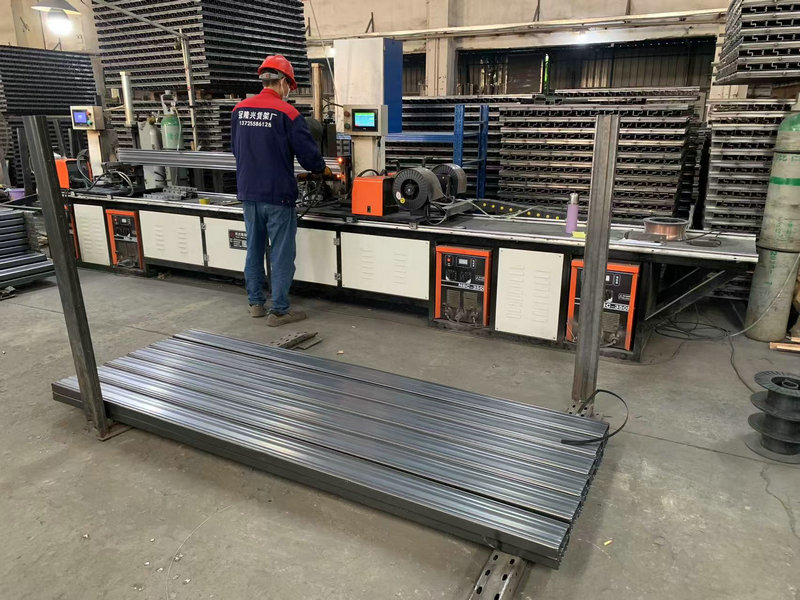
Our 28,600 m² modern facility features automated production lines, covering raw material processing, precision cold rolling, robotic spot welding, and automated electrostatic powder coating. This end-to-end integration ensures consistent quality across large-volume production cycles.
Our factory processes are structured to support industrial scale, high-precision customization, and reliable global logistics delivery.
| Established | 2017 (9+ Years Industry Experience) |
| Factory Area | 28,600 m² Production Facility |
| Annual Exports | > US$18 Million (Exported to 50+ Countries) |
| Active Partners | Over 980 Trusted Global B2B Partners |
| R&D & Quality Control | 62 Engineers / 46 QC Inspectors |
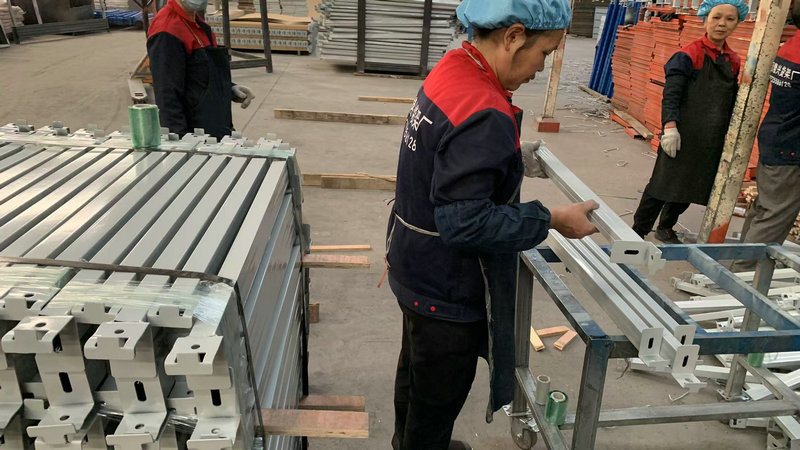
Our complete raw-material-to-finished-product manufacturing line guarantees structural durability and exact alignment for fast onsite installation.
Inventory turnover represents how efficiently products move through a facility. High-density storage racking systems are designed to balance maximum storage capacity with fast stock access. By matching specific rack designs to your SKU profiles, you can optimize both warehouse volume and operational throughput.
For perishable goods, pharmaceuticals, and fast-moving consumer products, FIFO compliance is critical. Racking systems like Gravity Pallet Flow Racks use inclined roller beds, allowing pallets deposited at the loading end to glide under gravity to the retrieval aisle. This ensures systematic rotation and reduces stock spoilage and aging issues.
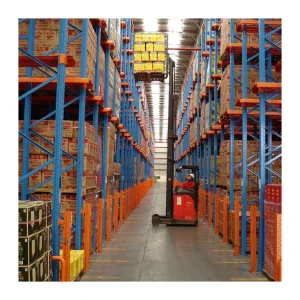
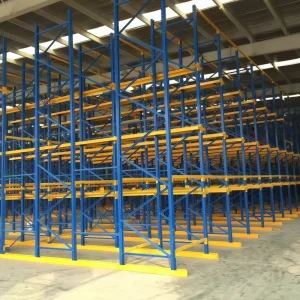
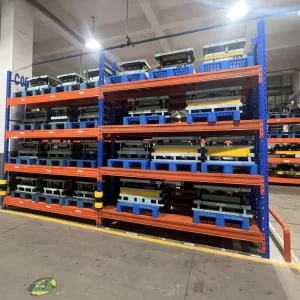
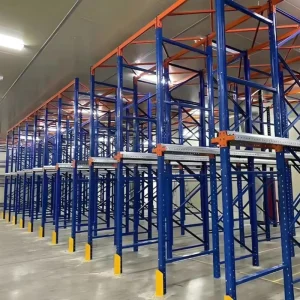
For bulk goods with long shelf lives, LIFO systems maximize density by reducing dedicated access aisles. Push-Back Pallet Racking and Drive-In Racking allow pallets to be stored multiple positions deep. In push-back systems, pallets slide on carts along inclined rails, pushing existing stock back and using up to 90% of available floor space.
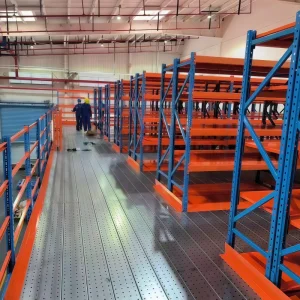
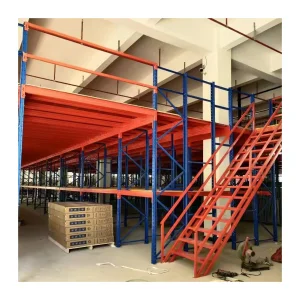
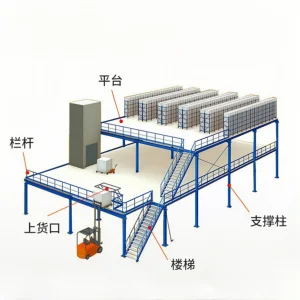
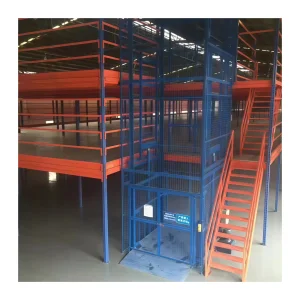
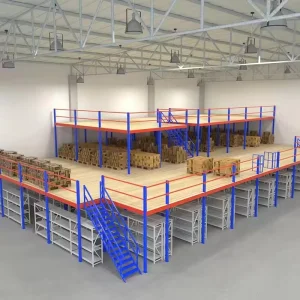
In warehouses with high ceilings, structural mezzanines and multi-layer steel platforms double or triple usable floor space. These systems are ideal for manual order picking, e-commerce sorting, and parts storage, allowing businesses to expand vertically without the need for building modifications.
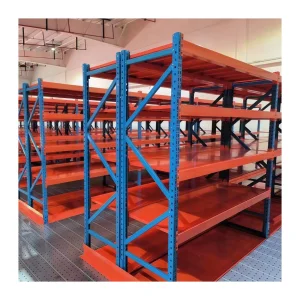
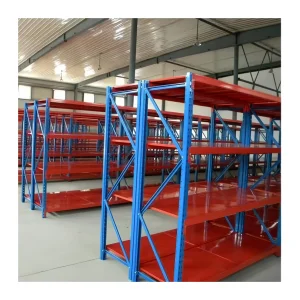
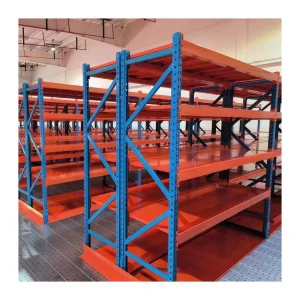
Designed for industrial storage, these adjustable systems support load capacities ranging from 1,000 kg to over 4,000 kg per level. They provide direct access to every pallet position, facilitating fast stock rotation and seamless integration with standard forklifts and reach trucks.
Every warehouse has unique layout requirements, load limitations, and material handling workflows. We offer complete OEM and ODM services to tailor storage configurations to your exact operational needs.
Our team of 62 R&D engineers develops custom solutions based on CAD and 3D modeling, factoring in seismic criteria, uniform distributed loads (UDL), and structural deflections. This ensures that every racking project is optimized for both safety and cost-efficiency.
With 46 dedicated QC inspectors on-site, we monitor quality throughout the production cycle:
Technical guidance on warehouse racking design, safety standards, and global purchasing processes.
The choice depends on product shelf life, SKU diversity, and inventory turnover targets. FIFO (First-In, First-Out) using Gravity Flow or Selective Racking is essential for time-sensitive, perishable, or batch-tracked goods. LIFO (Last-In, First-Out) using Push-Back or Drive-In Racking is ideal for uniform, high-volume goods with long shelf lives, maximizing storage density by reducing forklift aisles.
Our racking systems are engineered with safety factors conforming to international standards such as RMI and FEM 10.2.02. This usually involves structural safety factors between 1.5 to 1.8 under static loads, ensuring stability under rated capacity. Deflection calculations for beams are held strictly under L/200 (length of beam divided by 200) to prevent permanent deformation.
Yes. Our custom services support column heights up to 12 meters and beyond, and beam spans tailored to dynamic pallet widths. Load capacities can be configured from 500 kg/level (light-medium duty) to over 4,000 kg/level (heavy duty structural configurations), depending on steel gauge selection (typically 1.5mm to 2.5mm cold-rolled steel).
We offer two primary surface treatments: electrostatic thermoplastic powder coating (typically 60-80 microns thick) for standard warehouses, and hot-dip galvanizing for high-humidity, outdoor, or cold-chain refrigeration units (-25°C). The galvanizing process coats both interior and exterior surfaces with a zinc layer, protecting the underlying steel from oxidation.
Our typical manufacturing lead time for standard projects is 20 to 30 days after drawing approval and deposit. For complex customized projects, timelines may vary slightly based on structural steel sourcing. We handle direct container loading (FCL) from nearby ports in Guangzhou and Shenzhen to optimize international freight transit times.
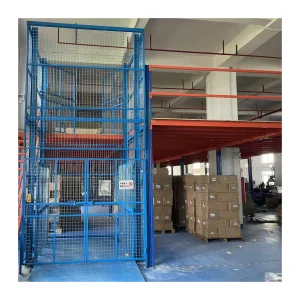
Heavy-duty structural mezzanine systems and integrated platforms engineered for space utilization and safety.
 Guanlong Rack