China Top 10 Warehouse Optimization Suppliers for Buyers

Time:2026-09-29 Author:Madeline
0%

Warehouse Optimization is no longer limited to adding shelves or speeding up picking. For many businesses, it means connecting warehouse layout, inventory data, labor, and equipment into a more reliable operation. In China, buyers can find suppliers offering warehouse management software, conveyor systems, automated storage, robotics, and consulting. Their capabilities vary widely. That matters.

This guide introduces ten suppliers for buyers to consider, with attention to practical fit rather than technology claims alone. A useful comparison looks at project experience, system integration, customization, implementation support, and after-sales service. It also asks how each solution handles everyday details: barcode accuracy, peak-season orders, narrow aisles, and software links to existing business systems. These details can shape performance long after installation.

A polished demonstration may not reveal maintenance needs or integration delays. No system is perfect. Buyers should request comparable project references, define measurable targets, and verify support arrangements before making a decision. Where possible, a site visit or limited pilot can expose issues that presentations miss. This overview is a starting point, not a substitute for technical due diligence. The best supplier is not necessarily the one with the most automation; it is the one whose solution fits the facility, workforce, budget, and growth plans. Some trade-offs remain, and buyers should examine them carefully.
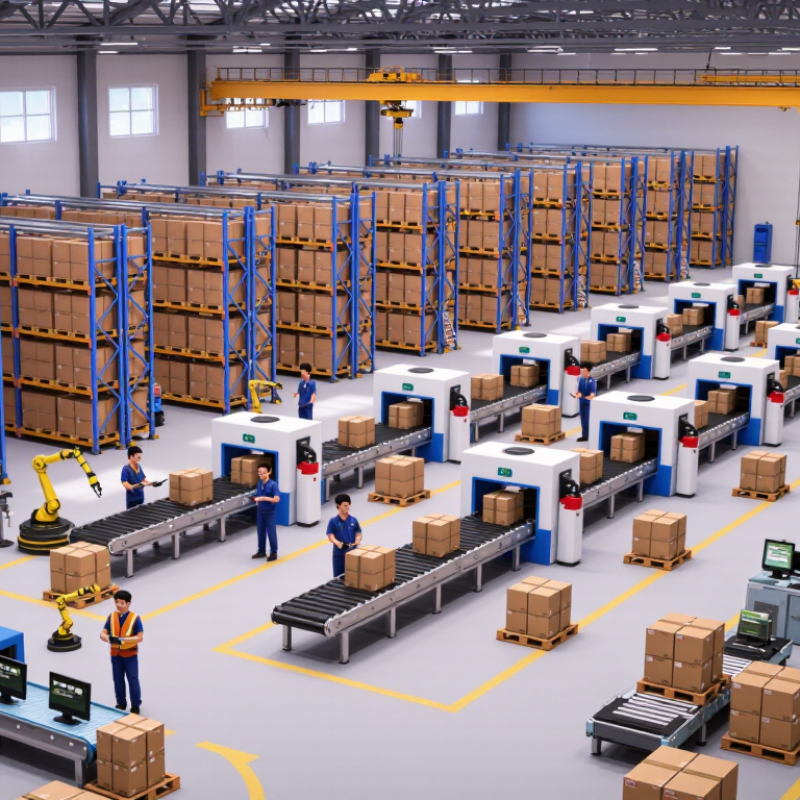
China Top 10 Warehouse Optimization Suppliers for Buyers

What Warehouse Optimization Means in China’s Supply Market

Warehouse optimization in China means coordinating storage space, inventory accuracy, labor, and order flow—not simply installing more automation. It can begin with practical changes: placing fast-moving cartons near dispatch lanes, reducing empty travel between pick faces, and keeping stock records aligned with physical counts. China Federation of Logistics and Purchasing reported 352.4 trillion yuan in total social logistics value for 2023, up 5.2% year on year. This figure describes the wider logistics system, not warehouse spending alone. Still, it shows the scale of the network that warehouses must support.

The 2024 MHI Annual Industry Report found that 55% of surveyed supply-chain professionals planned to increase technology investment. That is a global survey, not a China-specific forecast. Buyers should treat it as a directional signal, then check local labor costs, order profiles, building constraints, and software compatibility. A warehouse handling mixed cartons may need better slotting before robotics. An operator processing seasonal peaks may value flexible capacity more than maximum daily throughput. Small changes matter. Yet dashboards can make performance look cleaner than the floor feels; a missed scan or blocked aisle still disrupts a shift. Measure travel distance, picking accuracy, and orders completed per labor hour, then test improvements against real operating days.

How to Evaluate Chinese Warehouse Optimization Suppliers

China Top 10 Warehouse Optimization Suppliers for Buyers

How to Evaluate Chinese Warehouse Optimization Suppliers

Evaluating a Chinese warehouse optimization supplier requires more than comparing prices. Examine its experience with facilities similar to yours. Check warehouse size, product types, order volume, and labor conditions. Ask for measurable results from completed projects. Examples may include shorter picking routes, fewer errors, or higher storage density. Ask for evidence. Request anonymized project data, process maps, and customer references. A supplier with strong technical knowledge should explain slotting, inventory control, automation, and system integration clearly. Avoid impressive claims without baseline figures.

Visit the supplier’s office or project site when practical. Observe how engineers test scanners, conveyors, software, and safety controls. Discuss integration with your existing warehouse management system. Confirm support hours, training methods, spare-part access, and response times. Data protection also deserves careful review, especially when systems exchange order and inventory records. A small pilot can reveal hidden costs and weak communication before full deployment. Test the workflow. Set acceptance standards for accuracy, speed, uptime, and staff training. Contracts should define these standards and the remedy for missed targets. However, buyers should remain realistic. Forecasts can change, and a solution that works in one warehouse may fail in another. Recheck assumptions after the pilot, rather than trusting a polished presentation.

China Top 10 Warehouse Optimization Suppliers for Buyers - How to Evaluate Chinese Warehouse Optimization Suppliers

Anonymous supplier-category comparison for buyer evaluation—not a verified ranking of individual companies. Capabilities vary by provider and project; confirm specifications, references, pricing, and compliance directly before purchase.

No. Supplier Category Typical Optimization Scope Best-Fit Warehouse Need Evidence to Request Key Evaluation Point
1 Warehouse Management System (WMS) provider Inventory visibility, receiving, put-away, replenishment, picking, packing, and shipping workflows. Warehouses seeking better process control and inventory accuracy, with or without automation. Demonstration using representative workflows; interface list; implementation plan; support and upgrade terms. Check fit with existing ERP, order, transport, and barcode or RFID processes. Define data ownership and system responsibilities.
2 Warehouse Execution System (WES) provider Coordinates work between warehouse software, people, and automation; may sequence or release tasks in real time. Sites combining manual operations with multiple automated systems or changing order priorities. Architecture diagrams; task-orchestration scenarios; integration test results; exception-handling demonstration. Confirm whether the proposed system complements or replaces existing WMS or controls, and clarify which system owns each decision.
3 Warehouse Control System (WCS) provider Controls or coordinates equipment-level workflows such as conveyor routing, sortation, and automated storage interfaces. Facilities with material-handling equipment that need coordinated control and operational monitoring. Equipment interface specifications; throughput assumptions; fault-recovery procedures; commissioning and service scope. Verify compatibility with the actual equipment and control architecture. Require clear responsibility for software and equipment faults.
4 Automated storage and retrieval system (AS/RS) integrator Storage and retrieval automation using systems such as cranes, shuttles, or automated tote and case handling. Operations with suitable building conditions, repeatable inventory flows, and a need to increase storage density or automate retrieval. Layout and capacity calculations; load and safety specifications; site references; maintenance and spare-parts plan. Assess building height, floor conditions, SKU profile, peak demand, and recovery procedures. Compare total lifecycle cost, not equipment price alone.
5 Autonomous mobile robot (AMR) or automated guided vehicle (AGV) provider Moves goods, carts, totes, or pallets along configured routes or dynamically planned paths. Facilities seeking to reduce travel or repetitive transport work without installing a fully fixed transport network. Live site trial; route and traffic plan; payload and charging details; safety documentation; fleet-management interface information. Test performance under real traffic, floor, load, and network conditions. Confirm pedestrian-safety arrangements and manual fallback procedures.
6 Conveyor and sortation system integrator Automated movement, merging, diverting, and sorting of cartons, totes, or parcels. High-volume operations with stable flows and defined induction, destination, and exception-handling processes. Flow design; rated operating assumptions; peak-load test plan; safety measures; installation schedule and downtime plan. Validate the design against product dimensions, peak profiles, jams, and exception rates. Confirm how equipment integrates with WMS or WCS.
7 Goods-to-person or picking-system provider Brings inventory or orders to picking stations through automated storage, robotic handling, or guided picking technologies. Businesses with frequent small-item orders, high picking workloads, or space constraints that suit the proposed storage method. SKU and order-profile analysis; station design; achievable-rate assumptions; ergonomic review; pilot results using representative orders. Check item eligibility, replenishment workload, peak-hour capacity, and what happens when items or orders fall outside the system’s intended profile.
8 Warehouse design and process-optimization consultancy Analyzes layout, slotting, labor, inventory flows, and operational processes; may develop automation requirements. Buyers who need an independent assessment before selecting software, equipment, or a system integrator. Project methodology; data requirements; sample deliverables; relevant project references; disclosure of supplier relationships. Require transparent assumptions and measurable baseline metrics. Check that recommendations are not limited to a particular technology or vendor.
9 Warehouse systems integration provider Connects WMS, ERP, WES, WCS, automation equipment, identification systems, and operational data flows. Sites with equipment or software from multiple sources that need a coordinated end-to-end solution. Interface catalog; data-flow diagrams; integration test cases; cybersecurity approach; escalation and change-control process. Confirm ownership of each interface, documentation access, testing responsibilities, and support arrangements across all suppliers.
10 Warehouse automation retrofit and modernization provider Upgrades, extends, or integrates existing equipment and software rather than replacing the entire operation. Operating warehouses that need incremental improvements while managing installation disruption and legacy-system constraints. Existing-system survey; phased implementation plan; compatibility assessment; shutdown and rollback plan; post-installation acceptance criteria. Assess operational downtime, legacy support, spare-parts availability, and whether the upgrade preserves access to system data and documentation.

Top 10 China Warehouse Optimization Suppliers at a Glance

China’s warehouse optimization market covers more than software and storage equipment. This at-a-glance guide compares ten supplier profiles: warehouse management software providers, racking specialists, conveyor integrators, sorting system makers, robotic handling firms, barcode solution teams, cold-chain designers, warehouse consultants, safety equipment suppliers, and maintenance partners.

Reliable selection requires practical evidence. Buyers should examine installation records, system compatibility, operator training, service response, and documented safety controls. A supplier may offer impressive automation, yet struggle with older forklifts or uneven warehouse floors. Request a live demonstration. Check order accuracy, picking speed, inventory visibility, and recovery procedures during power interruptions.

Site conditions matter greatly. A 10,000-square-meter facility may need different solutions from a compact urban warehouse. Measure aisle width, ceiling height, loading patterns, seasonal demand, and labor availability. Ask for a phased plan rather than a costly all-at-once package. Our assessment approach values site experience, engineering depth, transparent pricing, and long-term support. However, rankings are never perfect. Some smaller suppliers provide excellent service but lack international documentation. Others have strong technical teams but slower after-sales communication. Careful interviews and reference checks remain essential before signing.

Supplier Profiles: Technologies, Services, and Target Buyers

Warehouse optimization suppliers in China range from automation manufacturers to software integrators and engineering consultants. Automation-focused firms may offer conveyor lines, sorting equipment, pallet shuttles, and robotic picking cells. Their target buyers often operate large distribution centers with steady order volumes and clear process bottlenecks. Ask how equipment performs during peak shifts, not only in a showroom demonstration.

Software suppliers typically provide warehouse management systems, inventory tracking, labor planning, and connections to existing business platforms. Look for practical details: barcode workflows, exception handling, reporting frequency, and support for older equipment. Implementation services matter too. A supplier may map storage locations, train supervisors, and help adjust picking routes. Ask for evidence. A polished demo can still hide gaps in daily use.

Engineering and consulting providers may focus on layout redesign, slotting studies, or phased automation for facilities with limited space. These services can suit smaller buyers who cannot justify a fully automated site, as well as larger operators planning expansion. Request a sample project plan with milestones, staffing needs, and expected downtime. Compare references from similar facilities, and check who will handle maintenance after installation. One detail is easy to overlook: product fit depends on actual SKU shapes, order patterns, and seasonal swings. Even a careful assessment can miss something.

Warehouse Optimization Supplier Evaluation: Common KPI Benchmarks

These procurement benchmarks represent commonly used warehouse performance targets for comparing automation, software, consulting, and implementation providers. Actual results vary by facility size, product mix, labor model, and operating environment.

Higher percentages indicate stronger target performance. Throughput and inventory accuracy should be evaluated together with implementation cost, integration capability, scalability, and ongoing support.

Buying Considerations: Cost, Integration, Support, and Compliance

For buyers comparing China-based warehouse optimization suppliers, the quoted software fee is only the opening number. Ask for a three-year cost model covering licenses, scanners, installation, upgrades, training, and downtime. MHI’s 2024 Annual Industry Report found that 55% of surveyed organizations planned to increase supply-chain technology investment. That makes cost discipline essential. Request a live estimate using your order volume, peak shifts, and number of sites, not a best-case sales scenario.

Integration can quietly become the expensive part. Check how the system exchanges orders and inventory data with existing business software, conveyors, and handheld devices. Ask suppliers to demonstrate a real exception, such as a short pick or delayed replenishment. Test it live. A polished demo may hide manual workarounds. Support terms should name response times, escalation contacts, update schedules, and training responsibilities; vague promises are hard to measure.

Compliance deserves the same scrutiny as performance. Confirm where operational data is stored, who can access it, and how access logs are retained. Review safety procedures for automated equipment and ask how software changes are tested before deployment. Requirements differ by site and market, so buyers should verify applicable standards with qualified local advisers. A small pilot can reveal integration gaps, but it may not expose peak-season failures. Be candid about that limitation when comparing suppliers.

FAQS

What evidence should I request from a warehouse optimization supplier?

Ask for anonymized project data, process maps, and customer references. Look for shorter picking routes, fewer errors, or denser storage. Check the baseline figures.

How can I judge whether a supplier understands my facility?

Compare its past projects with your warehouse size, products, order volume, and labor conditions. A compact site may need a different layout. Details matter.

Which costs should a supplier estimate?

Request a three-year estimate covering licenses, scanners, installation, upgrades, training, and downtime. Use your real order volume and peak shifts. Best-case estimates can mislead.

How should I test system integration?

Ask for a live demonstration using your existing software and devices. Include an exception, such as a short pick or delayed replenishment. Watch for manual workarounds.

What should I inspect during a site visit?

Observe engineers testing scanners, conveyors, software, and safety controls. Check whether older forklifts or uneven floors could affect operation. Look closely.

What can a pilot reveal?

A small pilot can expose hidden costs, integration gaps, and weak communication. Set standards for accuracy, speed, uptime, and staff training. It may still miss peak-season strain.

How can I compare ongoing support?

Ask for specific response times, escalation contacts, update schedules, spare-part access, and training responsibilities. Vague promises are difficult to measure. Get clear terms.

Which site details affect the proposed solution?

Measure aisle width, ceiling height, loading patterns, seasonal demand, and labor availability. A 10,000-square-meter warehouse may need a different plan from a compact urban site.

What data safeguards should I ask about?

Ask where operational data is stored, who can access it, and how access logs are kept. Confirm how software changes are tested before deployment. Some details are easy to overlook.

Conclusion

This guide explains what Warehouse Optimization means in China’s supply market and why it matters for businesses seeking greater storage efficiency, faster order fulfillment, and better inventory visibility. It outlines the main technologies and services used by local suppliers, including warehouse management systems, automated storage solutions, picking and sorting equipment, data analysis, system integration, and operational consulting. The article also presents a practical overview of ten supplier types and profiles their capabilities, service models, technology focus, and ideal buyer groups without promoting any specific brand.

For buyers, the guide provides a structured method for evaluating Chinese Warehouse Optimization suppliers. Key considerations include total cost, scalability, compatibility with existing systems, implementation timelines, after-sales support, staff training, data security, product quality, and compliance with applicable laws and industry standards. By comparing suppliers according to business goals, facility size, technical requirements, and long-term service capacity, companies can make more informed purchasing decisions and select solutions that improve productivity while reducing operational risks.

Madeline

Madeline

Madeline is a dedicated marketing professional with a wealth of expertise in our company's core offerings. With a keen understanding of the industry, she brings a unique perspective to her role, consistently delivering high-quality content that highlights the superior aspects of our products. As......