Global buyers rarely purchase storage equipment for appearance alone. They need capacity, access, safety, and predictable operating costs. Dynamic Storage can help warehouses use vertical space while keeping inventory visible and retrievable. Yet a compact layout is not automatically an efficient one. A narrow aisle may save floor area but slow picking. A high rack may increase capacity but demand suitable equipment, training, and fire planning. The right decision begins with actual workflows, not a supplier’s brochure.
Martin Christopher, a leading supply-chain scholar, wrote, “Supply chains compete, not companies.” His observation matters when buyers compare Dynamic Storage suppliers across borders. A reliable choice considers load ratings, corrosion resistance, spare-part availability, installation capability, and service response. Ask for drawings, test records, material specifications, and references from facilities with similar climate and throughput. Details matter. A humid port warehouse may require different finishes than a dry inland site. Currency, duties, delivery terms, and local technical standards also affect total cost.
This guide presents seven practical storage tips for global buyers. It examines demand forecasting, modular design, safe access, digital inventory visibility, and supplier verification. It also considers lifecycle value, because the cheapest quotation can become expensive after repeated repairs or difficult expansion. No layout is perfect. Forecasts can be wrong. Even experienced teams miss small constraints, such as door clearance or pallet variation. Treat each recommendation as a starting point, then validate it with site measurements, operators, engineers, and documented safety requirements. That discipline makes Dynamic Storage more adaptable, transparent, and dependable across changing markets.
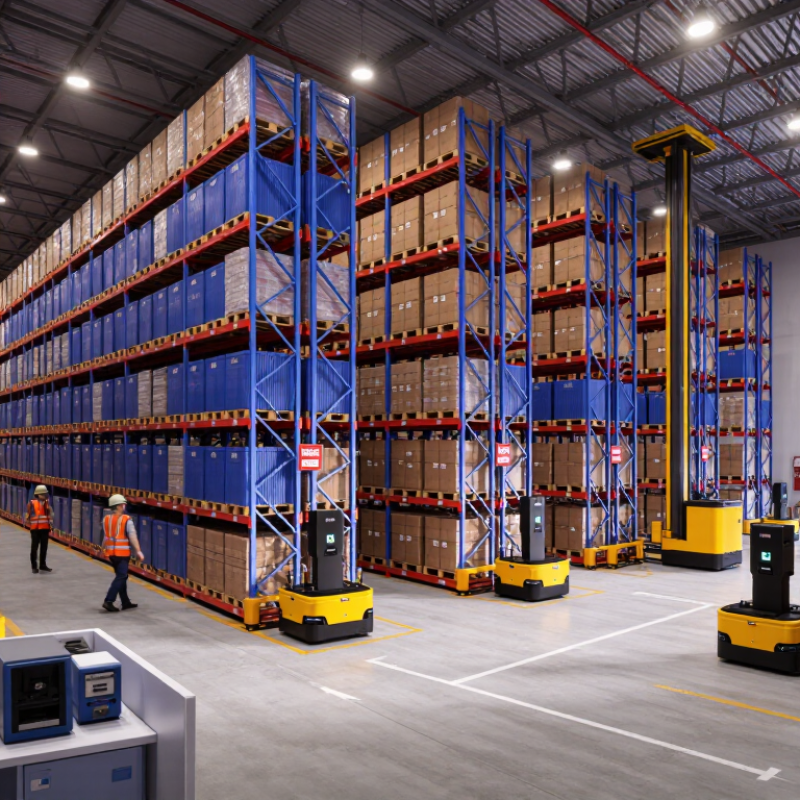
7 Dynamic Storage Tips for Global Buyers
Understanding Dynamic Storage Needs Across Global Markets
Global storage demand changes with seasons, income levels, delivery times, and local buying habits. A warehouse plan that works in Singapore may fail in a dry inland market. I have seen excess stock occupy valuable space while fast-moving goods waited for replenishment.
Start by mapping demand by country, product category, and sales season. Use modular racks that can expand without major construction. Keep popular items near dispatch areas, but review these locations regularly. Separate fragile, temperature-sensitive, and high-turnover goods with clear labels and physical zones. Small details matter.
Track inventory through a shared digital system, especially when several warehouses serve one region. Set safety stock according to transport reliability, customs delays, and forecast confidence. Do not use one global buffer. It can create unnecessary costs. Climate also deserves attention; humidity, heat, and dust can damage packaging before products move. Use suitable ventilation, sealed containers, and routine inspections.
Review storage performance every quarter with local teams. Their experience often reveals problems that spreadsheets miss. No forecast is perfect. A promotion, port delay, or sudden currency change can disrupt carefully planned capacity. Test one adjustment at a time, record the result, and revise the plan. Flexible storage is useful, but flexibility without disciplined data can become expensive confusion.
| Tip | Global Storage Dimension | Verified Market Fact | Dynamic Storage Action | Useful Planning Metric | Buyer Checkpoint |
|---|---|---|---|---|---|
| 1 | Match storage to local pallet standards | ISO 6780 recognizes several pallet footprints. Common examples include 1,200 × 800 mm in Europe, 1,200 × 1,000 mm in many international supply chains, and 1,219 × 1,016 mm, commonly expressed as 48 × 40 in, in North America. | Use adjustable rack beams, configurable deck levels, and modular floor locations. Confirm whether goods will be stored on local, export, or mixed pallet sizes. | Pallet footprint utilization (%) Clearance on each side (mm) |
Request pallet dimensions, maximum load, entry direction, and permitted overhang before finalizing the layout. |
| 2 | Plan for SKU velocity and demand changes | Inventory demand is not uniform: a small group of fast-moving SKUs often generates a large share of order lines, while long-tail products require broader assortment coverage. | Apply ABC slotting, place high-frequency items near pick faces, and reserve flexible locations for seasonal or newly launched products. | Order lines per SKU Pick frequency Seasonal volume variance (%) |
Ask for at least 12 months of SKU-level order history or a documented peak-season forecast. |
| 3 | Adapt to climate and temperature requirements | Storage conditions vary by product and market. Temperature-sensitive goods may require controlled ranges, while high humidity can increase condensation, corrosion, mold, and packaging damage risks. | Specify operating temperature and relative-humidity limits, add monitoring points, and separate ambient, chilled, frozen, or humidity-sensitive zones where required. | Temperature excursions Relative humidity (%) Monitoring coverage |
Define the product’s approved storage range, alarm thresholds, calibration frequency, and emergency response procedure. |
| 4 | Design for seasonal and regional peaks | Retail, agriculture, weather, public holidays, and regional buying cycles can produce short-term demand surges that differ between countries and hemispheres. | Combine permanent storage with adjustable overflow capacity, temporary staging areas, or movable shelving. Keep aisles and fire routes clear during peak periods. | Peak-to-average volume ratio Overflow capacity (%) Dock dwell time |
Model normal, peak, and disruption scenarios instead of sizing the facility only for average inventory. |
| 5 | Support different labor and handling environments | Labor availability, training levels, aisle practices, and material-handling equipment differ by location. Manual handling and powered equipment also create different throughput and safety requirements. | Select storage heights, aisle widths, access methods, and safety features according to the equipment and skill profile available at each site. | Lines picked per labor hour Travel distance per order Incident rate |
Confirm equipment dimensions, turning radius, operator certification needs, maintenance support, and local workplace-safety rules. |
| 6 | Build in power and automation flexibility | Electricity systems vary internationally. Common nominal supply standards include approximately 120 V at 60 Hz in parts of North America and approximately 230 V at 50 Hz in many European and other markets, with country-level variations. | Verify equipment voltage, frequency, plugs, backup power, network availability, and service capability before installing conveyors, shuttles, lifts, or automated storage equipment. | System uptime (%) Backup runtime Energy use per order |
Use the destination country’s electrical requirements and obtain confirmation from a qualified local electrical professional. |
| 7 | Prepare for traceability and regulatory variation | Products crossing borders may require batch, lot, serial, expiry-date, country-of-origin, customs, or language information. Requirements vary by product category and destination market. | Use configurable locations, barcode or RFID-ready identification, quarantine areas, and FIFO or FEFO rules where product life or compliance requires them. | Traceability accuracy (%) Expiry-risk inventory Stock-record accuracy (%) |
Validate labeling, retention, inspection, product-safety, and customs requirements with the relevant local authorities or compliance specialists. |
Planning note: Pallet dimensions and electrical values are representative international standards or common regional practices; final specifications should be confirmed for the destination country, product category, building, and applicable regulations.
Measure usable space, not floor area alone. Mark columns, fire lanes, docks, access limits, and safety paths. A 10,000-square-foot site may offer much less working space. Test pallet movement before signing a long-term lease.
Classify stock by size, turnover, value, and handling risk. Keep fast-moving items near dispatch points. Place slower items in higher or deeper locations. Leave empty capacity for unexpected arrivals. Full warehouses become slow.
Order patterns can change during promotions, port delays, and currency shifts. Prepare normal, high-demand, and disruption scenarios. One forecast is fragile. It may fail quickly.
Check ceiling height, floor strength, door sizes, and turning space. Review carton dimensions, supplier minimums, lead times, and replenishment rules. Calculate seasonal load changes, not only current inventory. A modest safety margin helps.
Request assembly drawings, torque guidance, labels, and safety instructions. Confirm local installation limits before ordering. Keep replacement parts and fasteners nearby. One missing connector can stop an aisle. Maintenance access matters too.
Confirm package dimensions, delivery terms, customs documents, and unloading equipment. Protect metal surfaces from moisture during transit. Check destination rules for wooden packaging. Use a detailed packing list. Ports and site access may still cause delays.
Track cubic utilization, inventory age, picking accuracy, damage, and order cycle time. Review them weekly or monthly. Include one physical aisle check. Simple dashboards work better than crowded ones.
Report items without movement for 90 days or longer. Separate fast movers from aging stock. Review supplier lead times and slotting rules monthly. Some seasonal items may still occupy premium locations too long. That needs reconsideration.
No. A barcode scan may miss a misplaced carton or damaged unit. Define available stock clearly, excluding quarantined and damaged items. Compare sites by order profile, not appearance. Manual checks remain necessary. Data can be wrong.
Dynamic Storage is becoming essential for global buyers managing changing demand, varied inventory profiles, and different operating conditions across markets. This article presents seven practical tips for understanding regional storage needs, assessing available space, forecasting inventory movement, and identifying operational requirements before selecting a solution. It emphasizes the importance of choosing flexible storage systems that can adapt to seasonal fluctuations, product growth, and evolving workflows without creating unnecessary complexity.
The article also explains how to plan installation, scalability, and international logistics with attention to site conditions, delivery coordination, workforce readiness, and future expansion. Finally, it highlights the value of regular performance reviews. By tracking space utilization, retrieval efficiency, inventory accuracy, safety, and operating costs, businesses can identify improvement opportunities and keep their storage strategy aligned with market changes. A thoughtful, review-based approach helps global buyers build more efficient, resilient, and adaptable storage operations.

 Guanlong Rack