Global buying has changed. Buyers now expect one coordinated path from supplier pickup to final delivery. That path may cross ports, warehouses, customs checkpoints, and multiple time zones. Integrated Logistics connects these moving parts through shared planning, technology, and operational accountability.
Martin Christopher, a leading logistics scholar and author, is widely associated with the statement, “Supply chains compete, not companies.” His insight remains practical. A delayed container can affect inventory, cash flow, customer trust, and production schedules within hours. Strong providers therefore offer more than freight booking. They combine transportation management, warehousing, tracking, compliance support, and exception handling.
This guide examines seven Integrated Logistics providers serving global buyers. The evaluation considers network coverage, digital visibility, multimodal capability, scalability, service reliability, and measurable customer value. Real-world performance matters. A polished dashboard cannot repair poor communication when a shipment misses a sailing.
Details matter here.
A capable provider should explain delivery milestones clearly, identify risks early, and document responsibility across handoffs. It should also adapt to different product categories, supplier locations, and purchasing volumes. No provider is perfect. Service quality may vary by country, carrier, contract, and local partner. That limitation deserves attention.
The strongest choice is not always the largest company. A regional specialist may understand a difficult port better. A global operator may provide broader systems and stronger continuity. Buyers should compare promises against evidence, including reporting accuracy, response times, claims procedures, and customer references. This balanced approach helps organizations select a logistics partner that supports growth without hiding operational weaknesses.
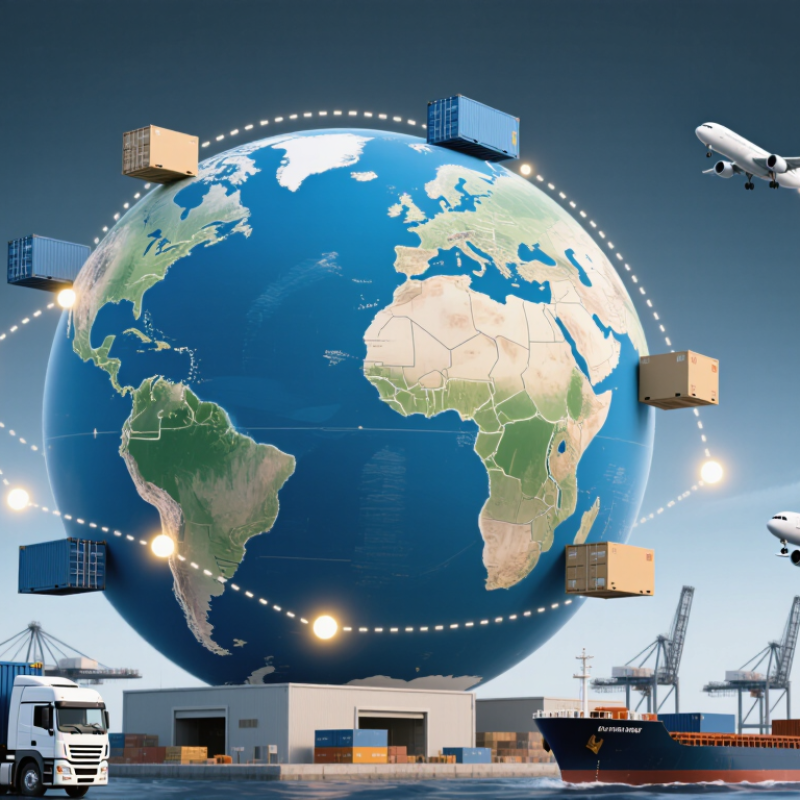
7 Best Integrated Logistics Providers for Global Buyers
Global Integrated Logistics: UNCTAD Reports Over 80% of Trade Moves by Sea
More than 80% of global merchandise trade moves by sea, according to UNCTAD’s Review of Maritime Transport 2023. About 70% of trade value also depends on ocean transport. This makes integrated logistics a practical requirement, not a marketing phrase. Global buyers need coordinated ocean freight, inland delivery, customs documentation, warehousing, and shipment visibility.
The strongest provider profiles usually offer seven capabilities: ocean planning, multimodal transport, customs expertise, inventory control, digital tracking, risk management, and responsive exception handling. UNCTAD’s maritime data shows how port congestion and schedule disruption can affect entire supply chains. The World Bank’s Logistics Performance Index 2023 also evaluates customs, infrastructure, tracking, and timeliness. These measures help buyers compare service quality beyond quoted freight rates.
Details matter. A reliable partner should identify the responsible team before cargo leaves the factory. It should show booking status, port milestones, container events, and delivery estimates in one system. Still, no provider controls every delay. Weather, labor shortages, and inaccurate cargo data remain difficult variables. I have seen polished dashboards hide weak follow-up. That is worth questioning. Buyers should test response times, audit performance records, and request realistic transit ranges before signing long-term agreements.
An anonymized comparison of major integrated logistics service models for global buyers. The profiles describe provider capabilities rather than individual companies or brands.
| Provider Profile | Overall Fit | Core Transport Model | Best Suited For | Key Integrated Services | Global Buyer Benefit | Important Selection Check |
|---|---|---|---|---|---|---|
| 1. Ocean-Led Global Integrator | High-volume ocean freight |
Full-container load, less-than-container load, feeder connections and inland road or rail transport | Manufacturers and importers moving regular containerized cargo across long-distance trade lanes | Booking management, consolidation, port coordination, cargo visibility, customs documentation and delivery scheduling | Efficient for large shipments because maritime transport carries more than 80% of world trade by volume | Port coverage, sailing frequency, inland capacity and ability to manage transshipment risk |
| 2. Air-Sea Multimodal Integrator | Speed and cost balance |
Combined ocean and air transport with road or rail connections at origin and destination | Buyers requiring faster delivery than ocean freight without using air freight for the entire journey | Route engineering, shipment consolidation, customs clearance, transfer handling and milestone tracking | Balances transit speed, inventory requirements and freight expenditure | Actual transfer points, service reliability, cargo handoff controls and rate transparency |
| 3. Contract Logistics Integrator | Supply-chain operations |
Multimodal transport supported by warehousing, distribution and inventory-management operations | Retailers, manufacturers and distributors that need storage and fulfillment in several markets | Warehousing, order fulfillment, cross-docking, inventory control, returns management and transportation planning | Reduces the need to coordinate separate warehouse and transportation partners | Warehouse locations, system integration, service-level agreements and peak-season capacity |
| 4. Project Cargo Integrator | Oversized or complex cargo |
Ocean, heavy-lift, charter air, inland haulage and specialized equipment transport | Energy, infrastructure, construction, industrial machinery and other non-standard shipments | Route surveys, permits, cargo engineering, lifting plans, insurance coordination and site delivery | Provides a single control point for shipments that require detailed operational planning | Engineering resources, heavy-lift partners, permits, risk controls and experience at the final site |
| 5. Temperature-Controlled Integrator | Time- and temperature-sensitive goods |
Refrigerated ocean, air and road transport supported by controlled storage facilities | Pharmaceuticals, vaccines, biologics, fresh food and other temperature-sensitive products | Cold storage, temperature monitoring, validated packaging, excursion management and regulatory documentation | Protects product quality across multiple transport and handling stages | Temperature ranges, monitoring records, contingency power, qualified facilities and regulatory compliance |
| 6. Cross-Border E-Commerce Integrator | High-volume small parcels |
Air, postal, express and regional road networks connected with fulfillment centers | Online sellers and buyers handling frequent, small-value shipments across borders | Pick-and-pack, label generation, customs data, parcel tracking, delivery and returns processing | Improves order visibility and simplifies international parcel fulfillment | Destination-country delivery performance, duties and taxes handling, returns process and data integration |
| 7. Customs and Trade Compliance Integrator | Regulated international trade |
Ocean, air, road or rail transport combined with customs brokerage and trade advisory | Buyers importing regulated, classified, high-value or documentation-intensive products | Tariff classification, origin review, import declarations, duty planning, document control and audit support | Reduces clearance delays and helps buyers manage border-compliance obligations | Broker licensing, knowledge of destination regulations, data accuracy and escalation procedures |
More than 80% of global merchandise trade moves by sea. Buyers also need inland delivery, customs documents, warehousing, and tracking. One coordinated process can reduce handoff confusion. Delays still happen.
Look for ocean planning, multimodal transport, customs expertise, inventory control, and digital tracking. Risk management and exception handling are equally important. Ask who handles problems when a container misses its schedule.
Review customs performance, infrastructure, shipment quality, logistics competence, tracking, and timeliness. These six areas provide a broader comparison. Request shipment records and delivery evidence. Presentations can mislead.
Give separate weights to cost, reliability, visibility, and compliance. Include storage, handling, insurance, duties, and delivery exceptions. Record actual results after every shipment. Revise weak assumptions.
Performance can differ sharply between routes, ports, and inland regions. Examine port access, warehouse locations, customs support, and last-mile capacity. Ask for recent delivery data on your actual lanes. Generic coverage maps are not enough.
A useful system should display booking status, port milestones, container events, and estimated delivery dates. Updates should reflect real events, not only predicted milestones. Ask how often information changes. Visibility must support action.
Low freight rates may hide storage, demurrage, rework, insurance, or missed production costs. Weather, labor shortages, border delays, and inaccurate cargo data can disrupt schedules. Fragile equipment may need reinforced packing. Seasonal goods require flexible capacity.
Yes, test one limited shipment when possible. Check response times, damaged-carton handling, missing-document procedures, and escalation contacts. Compare promised transit ranges with actual delivery. No evaluation method is perfect. Performance may still surprise you.
Integrated Logistics has become essential for global buyers as more than 80% of international trade moves by sea. A reliable provider can connect ocean, air, road, and rail transportation with customs coordination, warehousing, inventory management, and shipment visibility. To evaluate service quality, buyers should consider factors reflected in the World Bank’s 2023 Logistics Performance Index, including infrastructure, international shipments, logistics competence, tracking, timeliness, and customs efficiency.
This overview compares seven leading types of global logistics providers by examining geographic coverage, freight capacity, customs support, storage networks, technology, and delivery visibility. However, the best choice depends on each buyer’s trade lanes, shipment volumes, budget, product requirements, and tolerance for delays or disruptions. Buyers should compare total costs rather than transportation rates alone, assess risk-management capabilities, and confirm that the provider can offer consistent support across origin and destination markets. A well-matched Integrated Logistics partner can simplify international operations, improve supply-chain control, and support more predictable delivery performance.

 Guanlong Rack