Choosing the right shelving system can transform a crowded room into a practical working space. For global buyers, Compact Shelving must balance capacity, safety, durability, and easy installation. A narrow aisle may save valuable floor space, but it can also restrict movement and access.
This guide reviews 10 Best Compact Shelving Systems for Global Buyers through a practical purchasing lens. It considers steel quality, load ratings, modular design, corrosion resistance, and maintenance needs. It also examines manual and mobile systems for offices, archives, warehouses, libraries, and retail storage. Real-world details matter. A smooth rail can reduce daily effort, while clear labels prevent misplaced cartons and delayed orders.
Different markets require different decisions. Climate, building conditions, delivery distance, and local service support can affect long-term value. Buyers should verify product measurements, safety documentation, warranty terms, and replacement-part availability before ordering. Photos are useful, but they cannot confirm structural strength. Ask for technical drawings.
No system fits every buyer. A compact mobile unit may improve storage density, yet it can cost more than fixed shelving. Budget options may look attractive, but weak frames or poor instructions create hidden expenses. This comparison aims to provide balanced, evidence-informed guidance from a buyer’s perspective. Some recommendations may still require careful review, especially when suppliers provide limited testing data. Measure twice. Plan for change. A reliable shelving choice should support present needs without making future expansion unnecessarily difficult.
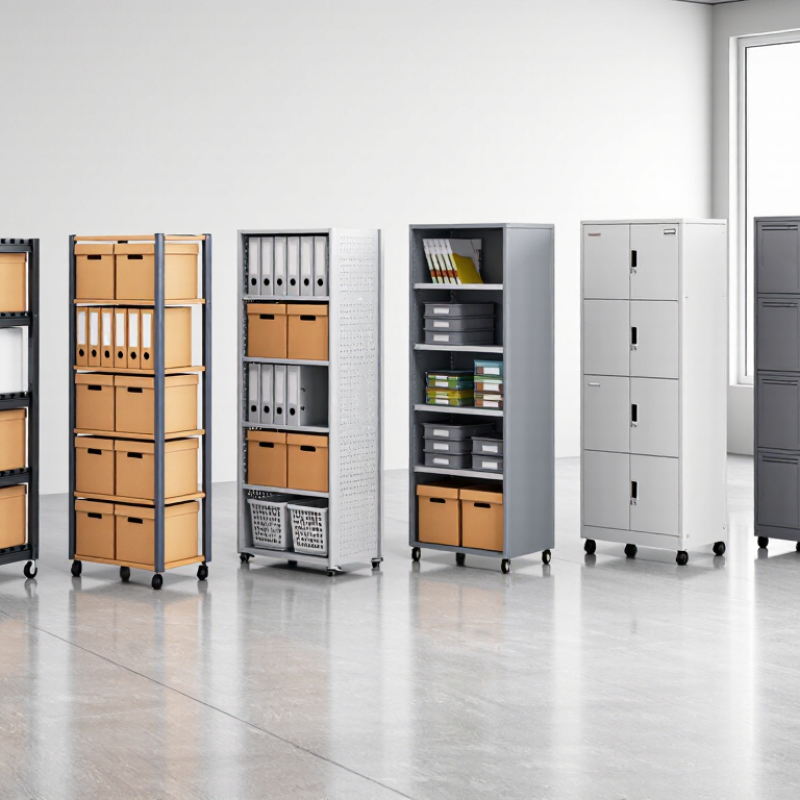
Compact shelving systems are storage solutions that reduce wasted aisle space. They use sliding carriages, movable shelves, or guided rows. Operators open only the aisle they need. This can increase usable capacity without enlarging the building. The MHI 2024 Annual Industry Report found that 55% of supply-chain leaders increased technology investment, while 88% planned further increases within five years. That pressure makes space-efficient storage increasingly relevant for global buyers.
A practical installation may replace several fixed aisles with one shared access aisle. However, density is not always efficiency. A warehouse storing cartons, files, or spare parts needs different shelf depths and load ratings. Buyers should check floor capacity, seismic conditions, humidity, fire protection, and local maintenance support. EN 15635 and comparable regional standards can guide safe inspection practices. The system must also match picking frequency; slow-moving inventory suits compact layouts better than continuously accessed goods.
Market reports often describe warehouse automation as a fast-growing sector. Fortune Business Insights projects the global warehouse automation market to reach about 41.3 billion dollars by 2030. Yet compact shelving is not automatically automated. That distinction matters. A low-cost manual system may outperform powered equipment in a small facility, but access can feel slower during peak demand. Pilot testing with real cartons and actual staff is wiser than trusting a catalogue capacity figure. The missing detail is often aisle behavior.
Compact shelving systems help global buyers use limited storage space without sacrificing access. Their structures differ in movement, load support, and installation needs. Understanding these differences matters more than choosing by appearance.
Mobile compact shelving runs on floor tracks. Hand wheels or powered drives move several units together, closing unused aisles. It offers high density but needs a strong, level floor.
Static shelving stays fixed and provides simple access from both sides. It costs less in many projects, although it consumes more floor area.
Sliding-door shelving uses cabinets that move horizontally. It suits offices, archives, and smaller items.
Pallet compact systems use guided frames or carts for heavier goods. Their deeper bays improve capacity, but forklift clearance and safety spacing require careful planning.
Mezzanine-supported shelving adds a raised structural level. It can double usable storage, yet building loads and emergency access must be checked by qualified professionals.
Tips: Measure ceiling height, aisle width, floor strength, and item weight before requesting quotations. Ask for load tests, corrosion protection details, and maintenance instructions. Local climate matters; humid warehouses may need stronger coatings. Do not trust capacity figures without checking shelf spacing and load distribution.
In my experience, buyers often focus on maximum capacity first. That can be a mistake. A dense system becomes inefficient when staff need frequent access. Consider retrieval time, future inventory changes, and local installation skills. Manual systems may be reliable, but powered systems can improve handling in larger facilities. Still, automation is not always better. A thoughtful compromise usually performs more consistently.
Compact shelving should save floor space without creating daily access problems. Evaluate usable capacity, not only the advertised shelf dimensions. Measure the items, aisle width, ceiling height, and door clearance before ordering.
A unit holding 500 kilograms may still fail if its weight is unevenly distributed. Check the load rating for each shelf and the complete structure.
Materials affect service life. Powder-coated steel suits busy storage areas, while corrosion-resistant finishes help in humid locations. Inspect welds, fasteners, moving parts, and edge protection.
Safety features should include anti-tip protection, stable bases, locking mechanisms, and clear operating instructions. Local building and workplace requirements may differ, so global buyers should request test documents and installation guidance.
I have seen plans look efficient on paper, then lose capacity because workers need wider access. Perfect calculations are rare.
Tips: Leave space around handles and moving sections. Label maximum loads clearly. Test one loaded bay before purchasing in volume.
Ask whether replacement parts are available locally. Review packaging, delivery damage procedures, and assembly support. A cheaper system can become expensive when small components are difficult to replace. Also reconsider unusually narrow aisles. They save space, but they may slow picking and increase contact damage.
International buyers often compare ten leading compact shelving systems by usable capacity, access, and installation effort. The first option is boltless adjustable shelving, suitable for mixed cartons and quick assembly. Rivet shelving offers stronger frames for heavier stock. Clip-in shelving reduces hardware and speeds relocation. Mobile shelving runs on floor tracks, creating dense storage with one active aisle. Sliding shelving uses similar movement but may suit lighter archive loads. Modular bin shelving keeps small components visible and organized. Carton-flow shelving supports first-in, first-out handling through inclined rollers. Pull-out shelving improves access to narrow compartments. Mezzanine-supported shelving uses vertical space but requires careful structural review. Wire shelving improves airflow and visibility in clean, dry areas.
International purchasing needs more than a catalog photograph. Buyers should verify load ratings, shelf dimensions, corrosion protection, packaging strength, and replacement-part availability. Ask for drawings with metric measurements. Confirm the delivered height, not only the frame height. This matters when containers, lifts, or low ceilings limit handling. Local installers should review floor flatness and anchor requirements before shipment. Safety documentation should be clear and traceable. A low unit price may hide costly freight, missing hardware, or difficult assembly. That weakness is often overlooked. I would also test one sample bay before ordering a full warehouse quantity. Product descriptions can sound precise, yet practical access may feel cramped. Compact storage saves floor space, but poor labeling can erase those gains. Procurement teams should compare total ownership cost, training needs, service response, and future expansion instead of choosing the smallest footprint alone.
| Rank | Compact Shelving System | Typical Application | Common Bay Width | Typical Shelf Load | Typical Height Range | Space-Saving Potential | Drive Method | Key Purchasing Consideration |
|---|---|---|---|---|---|---|---|---|
| 1 | Electric Mobile Shelving | Archives, records centers, museums, libraries, and office storage | 600–1,200 mm | 80–300 kg per shelf | 1,800–3,000 mm | Up to approximately 80% | Electric motor with control panel | Check floor loading, electrical supply, safety sensors, emergency release, and local machinery requirements. |
| 2 | Manual Mobile Shelving | Small archives, offices, spare-parts rooms, and retail back rooms | 600–1,200 mm | 80–250 kg per shelf | 1,800–2,700 mm | Up to approximately 70% | Handwheel, crank, or push-pull mechanism | Suitable for moderate access frequency; verify maximum bay length and operating force before ordering. |
| 3 | High-Density Archive Shelving | Document storage, legal files, government records, and business archives | 300–1,000 mm | 50–150 kg per shelf | 1,800–2,400 mm | Approximately 50–75% | Manual or electric mobile base | Plan for document-box dimensions, fire protection, aisle access, labeling, and long-term load stability. |
| 4 | Industrial Mobile Rack | Tooling, maintenance parts, components, and medium-duty warehouse inventory | 800–1,350 mm | 250–1,000 kg per shelf | 2,000–4,500 mm | Approximately 30–60% | Electric drive or mechanically assisted movement | Confirm distributed and point-load ratings, anchoring, rail alignment, seismic needs, and forklift access. |
| 5 | High-Bay Mobile Shelving | Large-volume inventory, technical libraries, and warehouse storage | 800–1,200 mm | 150–500 kg per shelf | 3,000–6,000 mm | Approximately 40–65% | Electric drive with guided mobile bases | Requires careful structural design, anti-tip protection, lighting, sprinkler coordination, and safe retrieval procedures. |
| 6 | Library Compact Shelving | Books, periodicals, research collections, and educational facilities | 200–900 mm | 40–100 kg per shelf | 1,200–2,400 mm | Approximately 40–70% | Manual handwheel or electric drive | Specify shelf pitch, book-support dividers, accessible aisle width, anti-tip features, and quiet operation. |
| 7 | Sliding Drawer Shelving | Small components, electronic parts, fasteners, tools, and laboratory supplies | 300–1,000 mm | 30–200 kg per drawer or shelf | 1,500–2,500 mm | Approximately 30–55% | Manual sliding drawers or pull-out frames | Compare drawer extension, cycle life, labeling format, compartment layout, and ergonomics for frequent picking. |
| 8 | Vertical Lift Storage System | Small parts, tools, production components, and controlled inventory | Internal trays typically 300–800 mm deep | 100–500 kg per tray | 2,000–10,000 mm | Approximately 60–90% of floor area | Motorized lift and automated tray presentation | Evaluate ceiling height, tray dimensions, retrieval speed, software integration, power quality, and service support. |
| 9 | Cart-Based Compact Storage | Healthcare supplies, cleanrooms, retail stockrooms, and flexible archives | 400–1,000 mm | 50–250 kg per cart | 1,200–2,400 mm | Approximately 30–55% | Manual pull-out carts on floor tracks | Check cart maneuverability, wheel or rail quality, hygiene requirements, access frequency, and floor tolerances. |
| 10 | Climate-Controlled Compact Storage | Pharmaceuticals, cultural collections, sensitive documents, and electronic components | 400–1,200 mm | 50–300 kg per shelf | 1,800–3,000 mm | Approximately 35–65% | Manual or electric mobile shelving inside a controlled room | Coordinate shelving with temperature, humidity, corrosion resistance, fire systems, air circulation, and validation requirements. |
Planning note: Dimensions, load ratings, aisle savings, and height ranges are typical market planning values rather than universal specifications. Final values depend on the selected configuration, materials, floor capacity, seismic conditions, safety standards, and local building regulations.
10 Best Compact Shelving Systems for Global Buyers?
Global buyers should evaluate more than storage capacity. The World Bank’s 2023 Logistics Performance Index covered 139 economies and highlighted reliability as a major supply-chain measure. Request shipping dimensions, gross weight, pallet requirements, and spare-part availability before ordering. A system that fits the warehouse may still fail at the destination. Confirm corrosion protection for humid routes and use shock-resistant packaging around control panels. UNCTAD reports that over 80% of global trade moves by sea, so moisture and port handling deserve serious attention.
Standards reduce uncertainty. Ask for documented load tests, material specifications, and quality procedures aligned with ISO 9001. Electrically powered units should match the destination’s voltage, frequency, grounding, and applicable safety requirements. Floor loading must be checked by a qualified engineer, especially in older buildings. Measure aisle width twice. Small errors become expensive after delivery. Installation drawings should show anchoring points, emergency stops, clearances, and uneven-floor tolerances. Local technicians are valuable, but remote video support can solve simpler alignment problems.
Support is often overlooked. Confirm manuals in the operator’s language, response times, training, and replacement-part lead times. A two-year warranty sounds useful, yet exclusions may cover the parts most likely to wear. Ask for real service records or anonymized case evidence. Perfect planning is impossible. Recheck assumptions after customs clearance, because packaging damage, missing fasteners, or changed site conditions can alter the installation plan.
Comparative buyer-fit scores for common compact shelving categories, assessed across international standards compatibility, shipping efficiency, installation simplicity, and supportability. Scores use a 0–100 index and represent generic system characteristics rather than company or brand performance.
Flat-pack and modular systems generally score higher for shipping and installation, while mobile, pallet-flow, and cantilever systems provide stronger capacity or specialized storage performance but usually require more planning, structural review, and professional installation.
Measure floor length, width, ceiling height, doors, and lift access. Leave space around handles and moving sections. Paper plans can mislead.
Measure the actual cartons, bins, or files. Check usable shelf depth and clear height, not frame dimensions alone. Uneven loads reduce practical capacity.
Request the load rating for each shelf and the complete structure. Confirm whether ratings assume evenly distributed weight. Test one loaded bay first.
Powder-coated steel suits busy, dry areas. Corrosion-resistant finishes help in humid locations. Wire shelves improve airflow in clean, dry spaces.
Look for anti-tip protection, stable bases, locking mechanisms, and clear instructions. Inspect welds, fasteners, moving parts, and sharp edges. Small details matter.
Mobile or sliding shelving creates one active aisle and uses floor space efficiently. Narrow aisles can slow picking and increase contact damage.
Modular bin shelving keeps small parts visible and organized. Pull-out shelving can improve access in narrow compartments. Labels must remain readable.
Request metric drawings, safety documents, installation guidance, and replacement-part information. Confirm delivered height, packaging strength, floor requirements, and anchor needs.
Compare freight, assembly, training, service response, and replacement parts. A low purchase price may hide missing hardware. I might still overlook something.
No. Test one sample bay with typical loads and real access conditions. Workers may need wider aisles than calculations suggest.
Compact Shelving refers to space-efficient storage systems designed to maximize usable capacity in offices, archives, warehouses, libraries, and other facilities where floor area is limited. This article explains how compact shelving works and compares major types, including stationary, mobile, sliding, and modular configurations. It highlights their structural differences and examines how shelving layout, load rating, material quality, corrosion resistance, and safety features influence long-term performance. Readers will also learn how to assess aisle access, weight distribution, fire considerations, and overall space efficiency before making a purchasing decision.
The guide introduces ten leading categories of Compact Shelving systems suitable for international buyers and outlines practical factors for global procurement. These include regional safety and product standards, packaging, shipping dimensions, customs preparation, installation requirements, maintenance, spare parts, documentation, and after-sales support. By combining technical evaluation with logistics and service considerations, the article helps buyers select a reliable system that fits their facility, budget, workflow, and future storage needs.

Guanlong Rack